Home › Commercial Gravel-to-Asphalt Conversions
Precision Asphalt Durham performs commercial gravel to asphalt conversions in Durham, NC for parking lots, drives, and access roads. We stabilize and grade existing stone, correct drainage, and install new asphalt to create a cleaner, more professional surface. Converting from gravel reduces dust, mud, and maintenance while making your property easier to use year round.
Precision Asphalt Durham provides professional commercial gravel to asphalt throughout Durham, NC, North Carolina and the surrounding area. Our licensed, insured crew delivers safe, clean, on-time work with a free estimate before anything begins. Call (984) 206-3947 or request your free quote.
Turn Your Gravel Lot Into a Professional Asphalt Surface
If your commercial property in Durham is still using a gravel parking lot or drive lane, you already know the headaches: dust on vehicles, mud after storms, potholes that keep coming back, and a rough impression for customers and tenants. Precision Asphalt Durham focuses on commercial gravel to asphalt conversions that take these problem areas and turn them into smooth, organized, and easy to maintain asphalt surfaces tailored to how your site really operates.
We start by walking the site with you. Instead of just looking at square footage, we look at how traffic actually flows, where trucks turn, where water currently collects, and how your customers enter and exit. For local properties near high traffic corridors like NC-147 or I-85, we often recommend slightly thicker asphalt and tighter turning radiuses for delivery trucks. For medical offices and professional suites, we pay extra attention to ADA routes, patient drop off areas, and signage visibility so the new pavement functions as well as it looks.
Because we work all over Durham and the surrounding Triangle, we know how Piedmont clay, sudden summer thunderstorms, and tree-lined edges affect gravel lots. Our goal is not just to cover your gravel, but to correct the problems in the base so your new asphalt does not crack, rut, or pond water in a couple of years. You end up with a surface that feels like part of a well planned commercial site rather than a quick upgrade.
How a Commercial Gravel to Asphalt Conversion Actually Works
A durable conversion is mostly about what you do under the blacktop. Precision Asphalt Durham follows a step by step process that fits local soil and weather conditions.
1. Site evaluation and layout: We measure the area, verify property boundaries, locate utilities, and analyze existing gravel depth. In many Durham lots we find thin gravel over compacted clay, which needs attention before paving. We also discuss any layout changes you want, such as adding parking bays, defining drive lanes, or creating loading zones.
2. Grading and subgrade correction: We strip soft, organic, or contaminated material and regrade the area so water drains to proper outlets. Durham storms can drop a lot of water quickly, so we build slopes that move water without feeling steep to drivers. If the clay subgrade pumps or flexes when equipment drives on it, we stabilize it with additional stone or, in trouble areas, a geotextile fabric to keep the stone from sinking.
3. Stone base construction: We import crushed stone (typically ABC stone) and spread it in layers, compacting each layer with vibratory rollers. For typical commercial parking, the base is usually 6 to 8 inches thick, but for heavier truck traffic we may recommend 10 inches or more in drive lanes and loading areas. We laser check elevations so your final asphalt thickness stays consistent.
4. Fine grading and proof rolling: Before any asphalt goes down, we run a loaded truck or roller over the prepared base and watch for rutting or movement. Any soft spots are dug out and rebuilt. This step is easy to skip, but it is critical for conversions on older gravel that may hide weak areas.
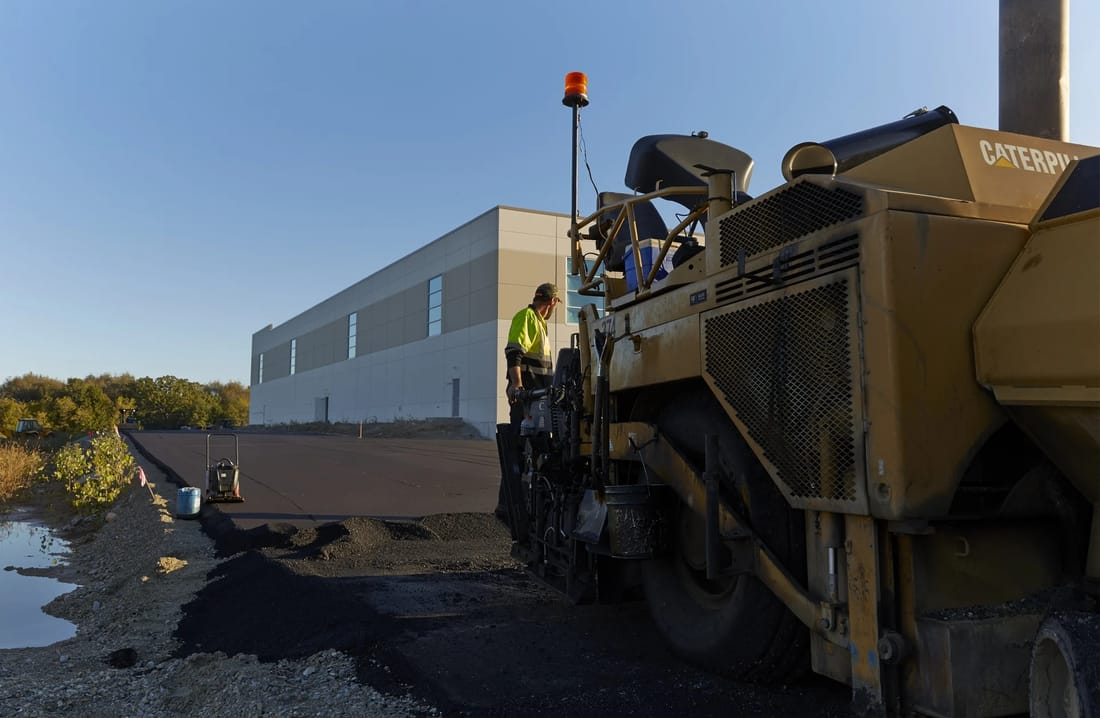
5. Asphalt paving: Once the base passes inspection, we install one or more asphalt layers. For light to medium duty lots we typically place a 2 inch to 2.5 inch surface course over an optional 2 to 3 inch binder course. The exact mix is chosen for Durham's freeze thaw cycles and the traffic your lot will see. We place asphalt by machine paver where possible for a smoother surface and hand work edges and tight areas.
6. Striping and finishing details: After the asphalt cools, we lay out parking stalls, ADA spaces, fire lanes, and directional arrows. Wheel stops, signage, and any speed humps are installed at this stage. You end up with a clearly organized lot instead of an unmarked gravel field.
Design Choices That Affect Cost, Durability, and Daily Use
Commercial gravel to asphalt conversions are not one size fits all. Precision Asphalt Durham walks you through specific design options so you know where your money is going and what trade offs you are making.
Pavement thickness: This is one of the biggest cost drivers. For retail or professional offices with mostly passenger vehicles, a total asphalt thickness of 2 to 4 inches on a solid stone base is usually sufficient. If your business has delivery trucks or dumpsters that are serviced frequently, we often thicken the asphalt in those drive paths and set dumpster pads in either thicker asphalt or concrete to prevent rutting where the truck lifts.
Base depth and stabilization: If your current gravel is thin or mixed with dirt, we will need more imported stone. This costs more up front but typically saves on repairs later. On sloped sites around Durham where erosion has been an issue, we may add edge restraints, drainage swales, or curb sections to keep the new pavement from unraveling at the sides.
Drainage strategy: Good drainage keeps your asphalt from failing early. Where space allows, we use surface grading and swales. In tighter urban or infill sites, we may recommend small catch basins or trench drains at low points. If you already have stormwater devices that were designed around a gravel lot, we coordinate with you or your engineer to make sure the conversion still meets city of Durham stormwater requirements.
Surface layout and markings: Converting from gravel is the perfect time to rethink traffic flow. We can add designated entry and exit points, separate truck routes from customer parking, create defined pedestrian walkways, and bring stall counts and ADA spaces in line with current codes. Simple changes like angled parking or clearer arrows often reduce congestion and fender benders on busy sites.
Timing and phasing: In Durham, the best paving seasons are typically from late March through early June and from September through early November, when temperatures are warm but not excessively hot and afternoon storms are less predictable. If your business must stay open, we can phase the work so customers always have a place to park, though staging and temporary traffic control add some cost.
Common Problems With Old Gravel Lots and How We Fix Them
Commercial gravel to asphalt projects almost always uncover issues that have been hiding under the surface. Precision Asphalt Durham addresses these during construction so they do not become long term problems.
Chronic potholes and ruts: These usually point to poor subgrade support, not just a lack of gravel. When we see potholes that come back quickly after each grading, we plan to excavate deeper in those locations, rebuild the base with proper stone, and, if needed, install geotextile to separate stone from clay. This keeps those areas from punching through your new asphalt.
Drainage and standing water: If you have puddles now, you will almost certainly have worse ones on blacktop unless the grades change. During layout we shoot elevations to see where water wants to go. Solutions can be as simple as adjusting slopes during grading, or as involved as cutting in a new drain structure and piping to an existing storm line. We explain options and costs before crews mobilize so there are no surprises.
Dust, mud, and tracking: Once your lot is paved, dust clouds and muddy entrances disappear, but the transition areas matter too. Where trucks leave a still unpaved yard, we may recommend a stabilized gravel entry or a short asphalt apron to cut down on mud carried onto public streets, which is important for staying in good standing with city inspectors.
Soft shoulders and drop offs: Gravel lots often taper into surrounding soil with no clear edge. When converting to asphalt, we look at how high the pavement will sit relative to landscaping, sidewalks, and building entrances. We may tie the new surface into concrete, add low curb where needed, or import topsoil to feather grades so there is no trip hazard along the edges.
Utility conflicts: Valve boxes, cleanouts, and manholes that sat flush with gravel may end up too low once asphalt is added. We locate these ahead of time, bring castings up to the new surface, and reset them neatly so maintenance crews still have access and your lot stays smooth around those points.
What Durham Property Owners Should Know Before Hiring
Replacing gravel with asphalt is a construction project, not just a surface treatment. A little planning on your side makes the process smoother and the results better.
Permits and approvals: In many commercial cases, small conversions that keep the same footprint can be handled with minimal permitting, but larger changes, added parking, or work near public streets may trigger city of Durham review or stormwater considerations. Precision Asphalt Durham can coordinate with your civil engineer or facility manager and provide the documentation related to pavement structure and drainage that they need.
Budget ranges and drivers: Cost is mainly driven by area, base depth, asphalt thickness, and drainage complexity. A flat, well drained lot that already has several inches of quality gravel will be less expensive to convert than a sloped yard with poor access and no existing base. If you share your expected traffic types, any known underground issues, and long term site plans, we can usually propose a couple of options that balance budget and longevity.
Scheduling and operations: A typical small to medium commercial conversion may take 2 to 5 working days, depending on weather and size. We help you plan around peak business hours, deliveries, and tenant needs. For example, office parks near Duke or downtown Durham often prefer grading work on Fridays and paving on weekends to reduce impact on weekday traffic. Clear communication with your tenants or customers ahead of time goes a long way toward a smooth project.
Surface life and maintenance: With proper base construction and routine upkeep, a commercial asphalt lot in our climate often provides 15 to 20 years of service before major rehabilitation. You should expect to budget for crack sealing and occasional patching, especially in high stress areas. Sealcoating is typically recommended every few years, not immediately, and always at the right time to avoid peeling. We walk you through a practical maintenance plan for your specific site.
Insurance, safety, and access: During work, we set up cones, tape, and signage to keep people away from active equipment and hot asphalt. You may need to notify your liability carrier if access patterns change temporarily, particularly for medical or residential facilities. We help you map out temporary walk paths and emergency access so that fire and medical responders can still reach your buildings at all times.
Why Work With Precision Asphalt Durham for Your Conversion
A successful commercial gravel to asphalt conversion in Durham is about experience with local conditions, attention to details you will never see again after paving, and the ability to keep your operations functioning while the work is underway. Precision Asphalt Durham focuses specifically on commercial and multi use properties, so our crews are used to working around tight schedules, high traffic, and existing tenants.
Our estimators and field supervisors are the same people who will see your project through, so the plan you approve does not get lost between the office and the job site. Before we schedule you, we verify material availability, disposal options for any unsuitable soils we remove, and coordination with any other trades on site. That preparation helps prevent mid project delays that can leave you with a torn up lot longer than necessary.
We also understand that new pavement is part of your brand. A clean, well marked asphalt surface projects stability and care to customers, employees, and tenants. We help you choose striping layouts that make sense for the way your specific business functions, not just what fits on paper. From churches that need Sunday heavy capacity to industrial users with shift changes and frequent truck turns, we have likely seen a layout similar to yours and know what tends to work long term.
When you are ready to talk through a commercial gravel to asphalt project in Durham or nearby communities, we can meet on site, review your goals, and provide a detailed written scope that explains what is included. That transparency lets you compare proposals accurately and choose the partner that really understands your property.